
Quick answer: Odors that keep returning through your vents usually aren’t floating in the air anymore. They’re coming from residue on surfaces the air passes over: soot, grease, or tobacco film on your ducts, blower, and filter, or smoke absorbed into porous duct materials that can’t be cleaned. To get rid of them, find the source, replace the filter, have the ducts cleaned by a NADCA member, replace porous duct material that has absorbed smoke, and fix whatever is producing the smell (like an unvented range hood). Air fresheners only mask the smell, and the EPA advises against ozone generators.
You’ve opened the windows, washed the curtains, and lit the candles. The house smells fine for a day or two, and then the heat or AC kicks on and the smell of last week’s fried fish, last year’s kitchen fire, or a previous owner’s cigarettes drifts right back out of the vents. It’s frustrating, and it usually means the smell is coming from somewhere your usual cleaning never reaches.
Why Do the Smells Keep Coming Back?
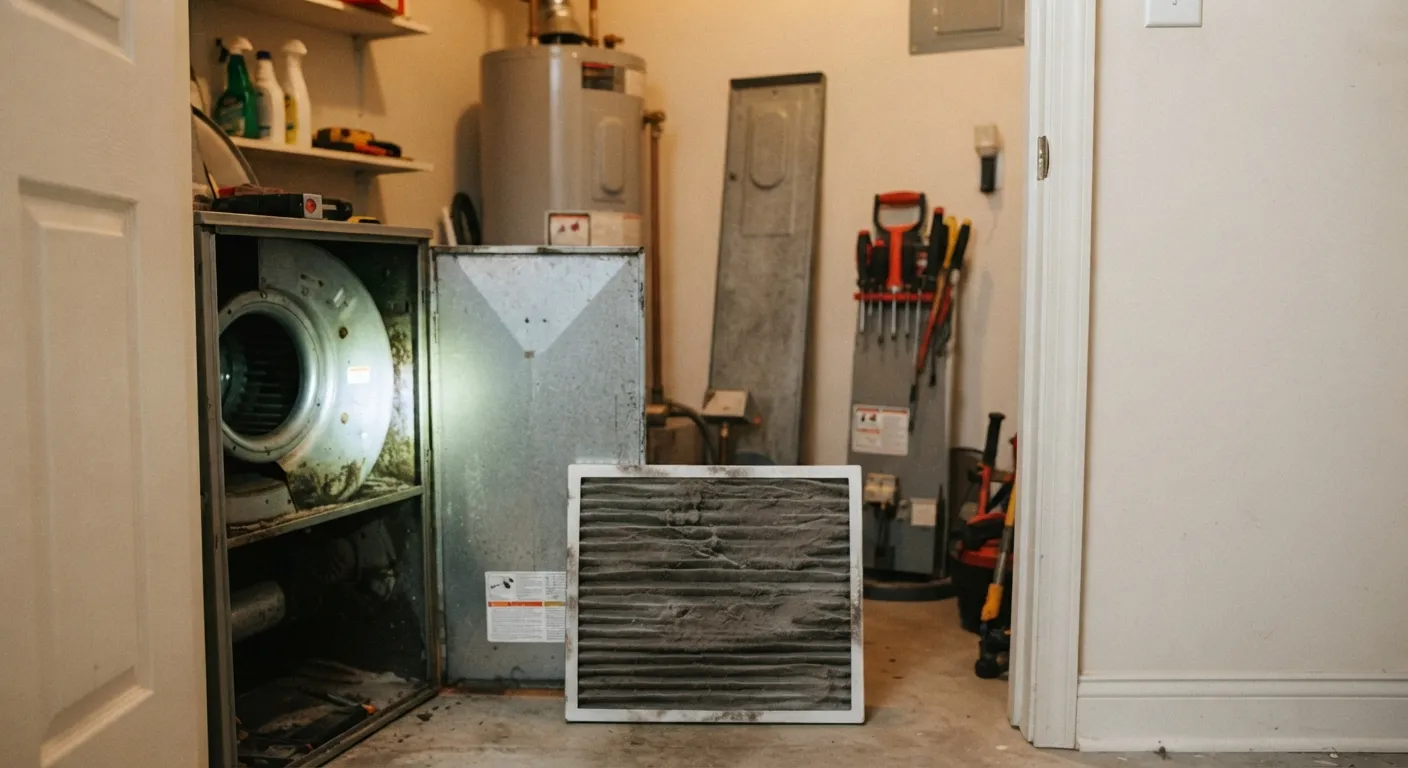
Your heating and cooling system is a loop. Return vents pull air from your rooms into the ducts, past the filter and blower, over the coil, and back out through the supply vents. Whatever is in that air, from smoke particles to cooking grease, has a chance to settle on the surfaces along the way.
Clean Concepts sees this most clearly after a fire. Smoke particles are drawn into the return vents and settle inside the ducts, on the blower, and around the coil. Every time the system starts, air moving across that residue can push odor and fine particles back into every room.
Some materials make it worse. Thirdhand smoke, the chemical residue left behind by tobacco smoke, doesn’t just sit on surfaces. It penetrates deep into porous materials like drywall, carpet, and furniture, which is why it can linger for years, and why the HVAC system can act as a reservoir that redistributes it through the home. Ductwork built from fiberglass duct board or flexible duct has the same problem. Smoke particles embed in the fibers, and restoration professionals generally say those materials can’t be effectively cleaned once they’re saturated.
Which Smell Is It, and Where Is It Coming From?
| The Smell | Likely Source | What Helps |
|---|---|---|
| Stale cigarette smoke | Tobacco residue in the ducts, blower, and filter, plus carpet, drywall, and furniture | Duct cleaning, a new filter, and cleaning the soft surfaces; heavily saturated materials may need replacing |
| Smoke after a fire | Soot in the ducts; kitchen and grease fires leave a sticky, smeared residue that takes more work to remove | Professional smoke restoration; porous duct board or flex duct that is saturated may need replacement |
| Cooking or frying odors | Grease and particles pulled into the return, a dirty filter, or a recirculating range hood | Vented hood use, a clean hood filter, a new HVAC filter; duct cleaning if residue has built up |
| Musty or damp smell when the AC starts | Moisture: a dirty or wet filter, a clogged drain line, a cracked drain pan, or mold in the ducts | An HVAC technician to fix the moisture problem; cleaning if mold is confirmed in hard-surface ducts |
Don’t assume every smell is smoke. In Central Alabama, where the AC runs for months in humid air, musty odors are common, and they come from moisture, not from anything you cooked. Our guide on how often to clean air ducts in Alabama’s humidity covers the moisture side in more detail.
Step by Step: How to Get Rid of the Smell
- Pin down the source. Notice when the smell is strongest. If it hits hardest right when the system starts and fades as air circulates, the ducts, filter, or blower are likely involved. If it’s constant, even with the system off, look at carpet, furniture, and walls.
- Replace your air filter. Trane suggests replacing filters every 30 to 90 days, and a filter that has been catching smoke or grease for months is itself a source of odor. For cooking pollutants, the EPA suggests filters rated MERV 13 or the highest your system can handle. Filters with activated carbon are sold for odor control; ask your HVAC technician whether your system can handle the extra airflow resistance.
- Deal with the source. For cooking, run a range hood that vents outdoors every time you cook, and keep it going 10 to 20 minutes afterward, as the EPA advises. Cook on the back burners when possible and wash the hood’s grease filter regularly. For smoke, wash textiles, vacuum with a HEPA vacuum, and clean hard surfaces. Painting alone won’t remove thirdhand smoke residue; it tends to bleed through.
- Have the ducts inspected and cleaned. A NADCA member will use source removal: the system under negative pressure with a powerful vacuum while brushes or air whips dislodge soot and grease from the duct walls, plus cleaning of the registers and blower.
- Replace what can’t be cleaned. If the inspection shows fiberglass duct board or flex duct saturated with smoke, replacement is usually the only fix that lasts.
- Skip the masking products. Air fresheners and fogs cover odors but don’t remove what’s causing them.
Can Duct Cleaning Remove Smoke and Cooking Odors?
In many cases, yes, when soot or residue inside the ducts is the source. Metal ducts can be cleaned thoroughly with agitation and HEPA-filtered vacuums, and that removes the material producing the smell. Clean Concepts’ process for smoke damage restoration follows six steps: inspecting the ductwork and components, protecting the space, using agitation tools and high-powered vacuums to remove soot, cleaning the registers and blower, treating remaining odors, and replacing filters.
Duct cleaning won’t help if the smell is coming from somewhere else, like a saturated carpet or a moisture problem at the coil. It also has limits with porous materials. Some restoration companies seal metal ducts with an encapsulant after cleaning. The EPA cautions that the safety and durability of duct sealants haven’t been well established and that chemical biocides lack proven effectiveness, so if a company suggests either, ask exactly what product is going in, why it’s needed, and what happens if it’s skipped. For a broader look at when cleaning pays off, see is air duct cleaning worth it.
Why Ozone Generators and “Odor Bombs” Aren’t the Answer
It’s tempting to reach for a machine that promises to destroy odors. The EPA’s position on ozone generators is clear: at concentrations that meet public health standards, ozone has little potential to remove indoor contaminants, and it isn’t considered useful for odor removal in ventilation systems. Ozone can also react with other chemicals in your home to create harmful by-products, and it irritates the lungs even at low levels. The EPA doesn’t recommend using it in ventilation systems, and no federal agency has approved these devices for occupied spaces.
Thirdhand smoke researchers say the same about air fresheners: they mask odors without removing the pollutants. Reducing the smell isn’t the same as removing the residue.
When to Call a Professional
- After any fire, even a small kitchen fire. Soot travels through the HVAC system, and the sooner it’s removed the better the odds of full removal.
- Heavy, long-term tobacco use in the home. When smoking has been going on for years, thirdhand smoke experts note that removal may require replacing building materials, not just cleaning.
- A musty smell that follows the AC. This points to moisture, and the fix starts with an HVAC technician. If you suspect mold in the system, the EPA advises against running it until it’s been checked, because it can spread contamination through the house.
- Odors that return within days of cleaning. That’s a sign the source hasn’t been found.
Frequently Asked Questions
Why does my house smell like smoke when the AC or heat turns on?
Air moving through the system picks up odor from residue on the ducts, blower, coil, or filter, and carries it into every room. That’s why the smell is often strongest when the system starts.
Will changing my air filter get rid of the smell?
It helps, and it should be your first step, but a new filter alone rarely solves it if soot, grease, or tobacco film is coating the ducts or blower.
Can duct cleaning remove cigarette smoke smell?
It can remove residue from metal ducts and the blower, which often reduces the smell noticeably. It won’t remove the odor from carpet, drywall, or furniture, so cleaning the home’s surfaces matters too.
Do ozone generators or air fresheners work for smoke or cooking odors?
No. Air fresheners mask odors, and the EPA says ozone has little potential to remove contaminants at safe levels and isn’t useful for odor removal in ventilation systems.
Will duct cleaning get rid of the smell from a kitchen fire?
In many cases, yes, if soot in the ducts is the source. Grease fires leave a sticky residue that takes more work, and if the ductwork is fiberglass duct board or flex duct saturated with smoke, replacement may be needed.
How do I stop cooking odors from spreading through my vents?
Use a range hood that vents outdoors every time you cook and keep it running 10 to 20 minutes afterward. Recirculating hoods are generally much less effective. Clean the hood filter, change your HVAC filter regularly, and keep an eye on buildup near the return vent closest to the kitchen.
Why Clean Concepts
Clean Concepts has served Montgomery and Central Alabama homeowners for more than 30 years [confirm founding-date phrasing: since 1989 / legally formed 2011]. We clean HVAC systems after structure fires, kitchen and grease fires, and tobacco smoke residue through our smoke restoration service, and we’re a NADCA member with a certified Air Systems Cleaning Specialist on staff, cleaning to ACR, the NADCA standard. We stand behind our work with a 100% satisfaction guarantee.
If odors keep coming back through your vents, call Clean Concepts at 334-425-0064 or learn more about our air duct cleaning in Montgomery. We serve Montgomery, Prattville, Wetumpka, Auburn, Opelika, Alexander City, Selma, Troy, Greenville, Evergreen, and Centreville.