
Quick answer: Dust and a musty smell after a duct cleaning usually mean the ducts weren’t the whole problem. The most common causes are leaky ducts pulling in dust, a clogged or poorly fitted filter, everyday dust from other sources, a moisture problem at the coil, drain pan, or ducts, or a cleaning that skipped parts of the system. Cleaning removes buildup, but it can’t fix leaks or moisture. Start with the filter, check for standing water and high humidity, and ask the company exactly what was cleaned.
You paid for a duct cleaning, the crew left, and within days the dust is back and the vents still smell musty. It’s frustrating, and it’s natural to wonder whether the job was done at all. Sometimes that’s the answer. More often, the ducts were only one piece of the puzzle. Here are the causes worth checking, in the order that saves you the most time and money.
First Question: Was the Cleaning Complete?
Rule this out first, because it’s the one cause you can hold someone accountable for. NADCA says a proper cleaning covers the whole system: the ducts, coils, drains, registers, and grilles, using agitation tools and a vacuum together. The EPA’s checklist for judging the result says the heat exchanger, cooling coils, blower components, plenums, ductwork, and registers should all be visibly clean, with no debris. NADCA’s rule of thumb is simple: if you can still see dust or debris, the system isn’t clean.
A leftover musty smell in particular can mean the coil or drain pan was skipped, since those are common moisture spots. NADCA’s specification calls for drain pans to be cleaned and flushed. If you paid for a “whole-house special,” this is the most likely explanation. NADCA warns that such offers often cover only limited portions of the system and may leave out the air handler, blower fan, coils, and registers. Our posts on air duct cleaning scams and choosing a professional duct cleaner cover the warning signs.
Call the company, ask exactly what was cleaned, and ask for a re-inspection. A NADCA member should be willing to show you. For a refresher on what a proper job includes, see our step-by-step walkthrough.
Why the Dust Keeps Coming Back
Leaky Ducts
Cleaning the inside of the ducts does nothing about holes in them. Leaks let dust, insulation fibers, soil gases, and humidity from attics and crawlspaces get pulled into the home, according to Pacific Northwest National Laboratory’s building science guidance. ENERGY STAR estimates that in typical homes about 20 to 30 percent of the air moving through the duct system is lost to leaks, holes, and poorly connected ducts. Clues include rooms that are hard to heat or cool, stuffy spaces, and high utility bills. Leaks are typically sealed with mastic, not ordinary cloth duct tape, which ENERGY STAR says doesn’t last. An HVAC contractor can test ducts you can’t reach.
The Filter
A clogged filter can’t do its job, and a filter that doesn’t fit lets air slip around it. The EPA advises making sure no gaps let air bypass the filter, using a high-efficiency filter recommended by your system’s manufacturer, and changing it regularly. For reducing fine particles, the EPA suggests at least MERV 13, as long as your system can handle it, so ask your HVAC technician before upgrading.
Dust That Has Nothing to Do With Your Ducts
The EPA says research hasn’t conclusively shown that dirty ducts raise the dust levels in your living space, and it notes that outdoor pollutants and everyday activities can contribute more. Outdoor particles like pollen and road dust come in through windows, doors, and small cracks. Indoors, the sources include cooking, candles, tobacco, pet dander, dust mites, mold spores, and household products. A dusty house can be all of these at once. Our post on why Montgomery houses stay dusty goes deeper on local causes.
Why the Musty Smell Hasn’t Gone Away
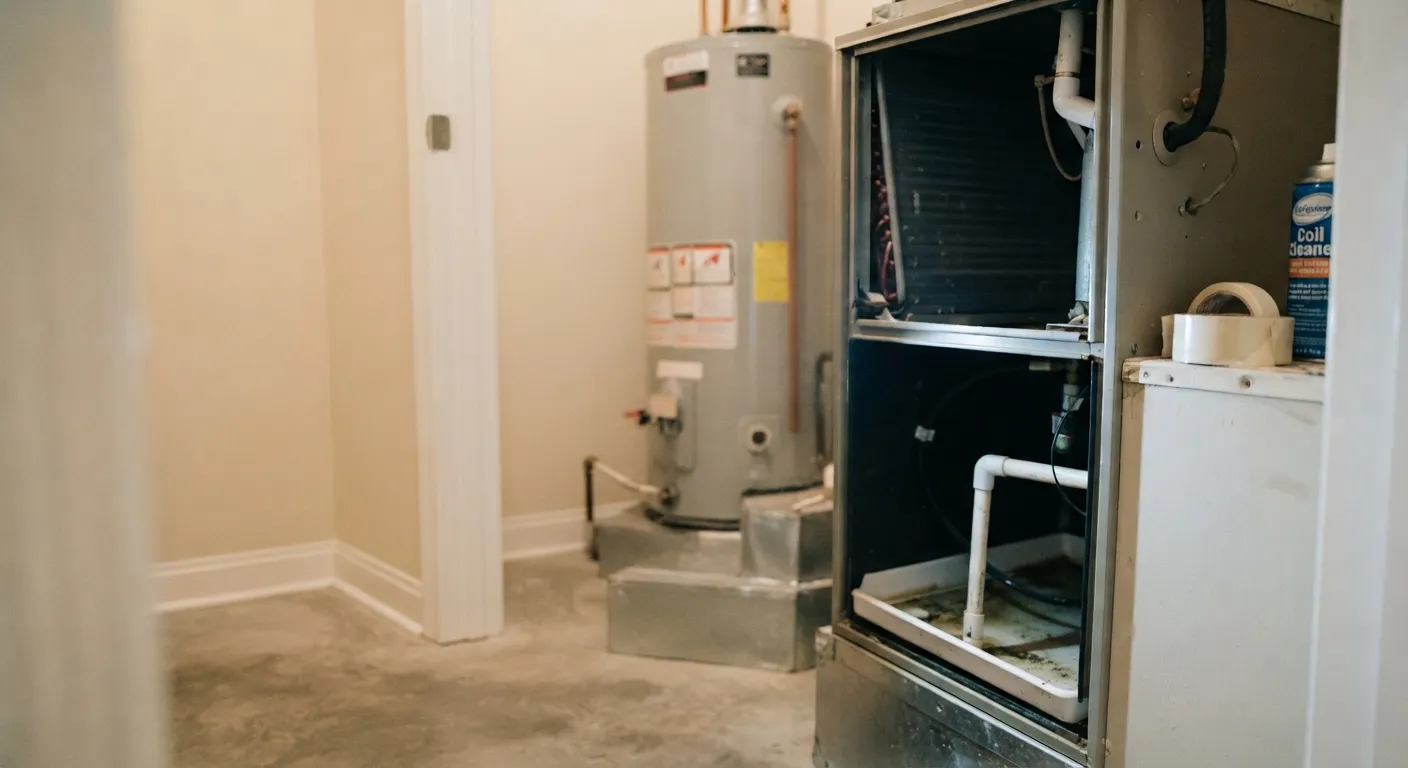
A musty smell from the vents usually points to moisture. Trane, an HVAC manufacturer, says that when a musty smell comes from the vents as the AC starts, you have a moisture issue, and its list of causes includes a dirty or wet filter, a clogged drain line, a cracked or overflowing drain pan, mold in the ducts from leaks or excess moisture, and blocked airflow that causes condensation.
Central Alabama makes moisture problems more likely. Montgomery’s average relative humidity hovers around 70 percent, and average dew points sit close to 70°F from June through August. The EPA identifies condensation on cooling coils as a major source of duct contamination and says moisture shouldn’t be present in ducts at all. It recommends fixing leaks promptly, making sure condensate pans drain, sealing and insulating ducts in unconditioned spaces, and choosing an appropriately sized air conditioner.
Here’s why that matters after a cleaning: removing residue doesn’t remove the moisture. The EPA is direct on this point. If the conditions that caused mold growth aren’t corrected, mold will recur. And if the insulation inside your ducts has gotten wet or moldy, the EPA says it can’t be cleaned effectively and should be replaced.
Not every musty smell comes from the HVAC system. Carpet, closets, bathrooms, and damp corners can all smell musty. If the smell is constant, even when the system is off, the source is probably in the room. And if what you’re noticing is more smoke or food than mustiness, our guide to smoke and cooking odors coming through vents may help.
Quick Reference: Symptom, Likely Cause, Who to Call
| What You Notice | Most Likely Cause | Who to Call |
|---|---|---|
| Dust returns fast; some rooms are uneven or stuffy | Leaky ducts pulling in dust | HVAC contractor (duct testing and sealing) |
| Dust plus a filter that looks gray or ill-fitting | Clogged filter or air bypassing it | You (replace and fit correctly) |
| Dust worse when windows are open or pollen is heavy | Outdoor particles coming in | You (filter, seal gaps, ventilate wisely) |
| Musty smell when the AC starts | Moisture at the filter, drain line, or pan | HVAC technician |
| Musty smell plus visible growth | Possible mold in the system | A professional assessment; don’t keep running the system |
| Debris still visible in ducts, coil, or registers | Incomplete cleaning | The original cleaning company |
| Musty smell even with the system off | A source in the room (carpet, closet, damp area) | You (find the moisture source) |
A Troubleshooting Sequence, Cheapest Steps First
- Replace the filter. Trane suggests every 30 to 90 days, and make sure it seats without gaps.
- Check your humidity. The EPA recommends keeping indoor relative humidity below 60 percent, ideally between 30 and 50 percent. A humidity meter costs roughly $10 to $50.
- Look at the indoor unit. Standing water in or around the drain pan, or a drain line that isn’t draining, calls for an HVAC technician.
- Inspect a register with a flashlight. If you see visible debris, that supports going back to the cleaning company.
- Look for signs of leaks. Uneven temperatures and dusty streaks around returns are clues. Ask a contractor about duct leakage testing.
- Call the cleaning company with specifics. Ask what was cleaned, whether the coil and drain pan were included, and whether a final inspection was done.
- If you suspect mold, stop and get it checked. Only lab testing can confirm mold, and the EPA advises against running the HVAC system if you know or suspect contamination, since it can spread through the house.
Frequently Asked Questions
Is it normal to have dust after air duct cleaning?
Some dust is normal in any home, because it’s constantly produced by people, pets, cooking, and the outdoors. But heavy dust returning quickly, or debris blowing from the vents, points to a leak, a filter problem, or an incomplete cleaning.
Can leaky ducts be why my house is still dusty?
Yes. Leaks in attics and crawlspaces can pull dust and insulation fibers into your home, and cleaning the inside of the ducts won’t stop that. Sealing them is a separate job.
Can a dirty filter cause dust and a musty smell?
Yes. A clogged filter lets less dust get captured, and a dirty or wet filter is one of the causes Trane lists for musty smells. It’s the cheapest thing to check first.
Should I worry about mold if the musty smell continues?
Take it seriously, but don’t assume the worst. Mold needs moisture, so look for standing water, a clogged drain, or high humidity. Only lab testing can confirm mold. If you see growth, get a professional assessment before running the system.
What humidity level helps prevent musty smells?
The EPA recommends keeping indoor relative humidity below 60 percent, ideally between 30 and 50 percent.
Should I have my ducts cleaned again?
Not until you’ve ruled out other causes and confirmed whether the first cleaning was complete. If components are still visibly dirty, ask the original company to return. If the problem is leaks or moisture, another cleaning won’t fix it.
Why Clean Concepts
Clean Concepts has served Montgomery and Central Alabama homeowners for more than 30 years [confirm founding-date phrasing: since 1989 / legally formed 2011]. We clean the entire system, not just the visible openings, and we hand-clean every vent cover. We’re a NADCA member with a certified Air Systems Cleaning Specialist on staff, cleaning to ACR, the NADCA standard, and we stand behind our work with a 100% satisfaction guarantee.
If you’re still seeing dust or smelling mustiness, call Clean Concepts at 334-425-0064 to talk through what you’re noticing and get a free estimate. We serve Montgomery, Prattville, Wetumpka, Auburn, Opelika, Alexander City, Selma, Troy, Greenville, Evergreen, and Centreville. Learn more about our air duct cleaning in Montgomery.